
Trust the Process
We in here talking about practice. Not a game

After a couple months of progressing, assessing, finessing, stressing, and depressing, I’m ready to start expressing. That’s right, it’s new art time! In accordance with my new ‘give a crap about social media’ policy, posting about my process seems a good idea.
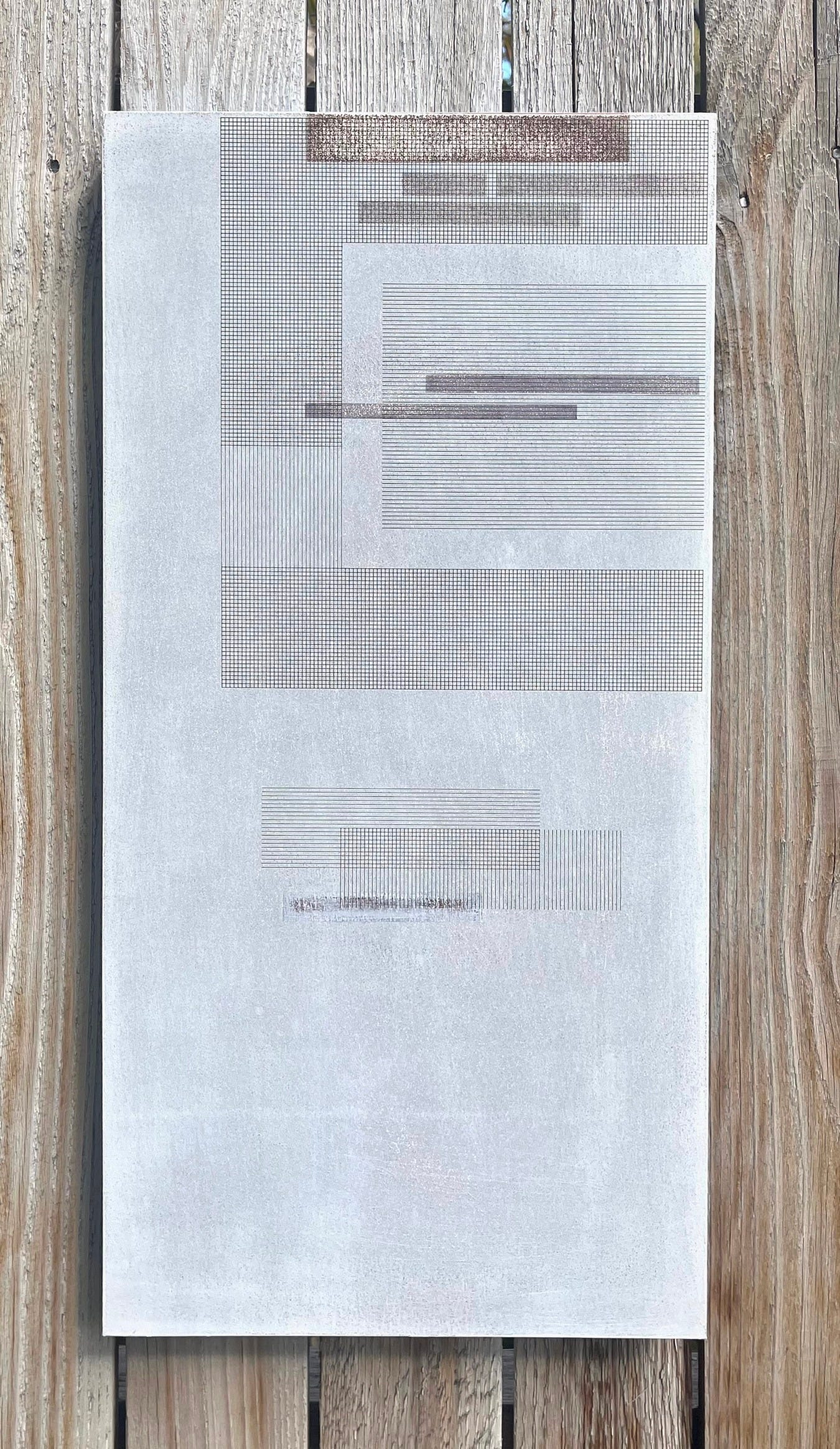
I (starting to) like talking about how I make my art. Nothing is necessarily groundbreaking, but I did come to it honestly, and organically. When I started painting in January 2023, I had an idea of where I wanted things to end up. Thankfully I think I’ve achieved (most) of that vision. A lot of it came about naturally, finding solutions I didn’t expect to problems I thought I understood. It’s very rewarding to discover methods that make me happy, though ‘stumble into’ might be more apt than ‘discover.’ So be it.
The process is pretty simple when it’s all broken down:
Draw and design the overall piece, and create the Adobe Illustrator file for laser cutting. This is where decisions about forms (the groupings of lines) and boxes (the highlighted areas of color) are made, and, though nothing is final, once it’s on Adobe and confirmed, it usually doesn’t change.
Paint 8-12 base layers of a few different colors. Each layer is uniform and ‘flat’ across the entire wood panel.
Sand most of that paint away, ‘releasing’ the color underneath and creating a nice mix of all the different layers.
Work to create the boxes of color. More detail on that later
Work around the boxes of color to make the rest of the panel suitably light enough for the lines and forms to stand out.
Polish the finished piece so that it is COMPLETELY flat.
Take it to Tinkermill and use the laser cutter.
Diving in a bit: the drawing and designing is the most fun, creative part. Here I’ll usually spend a few days first thinking about and conceptualizing what I want the finished individual pieces and series as a whole to look like. Pretty informal stuff, sketches in a little notebook. Once that’s vaguely established I create a ‘story’ document that I can follow across each painting in the series.
I then start plotting the sketches and story into a more rigorous drawing, to scale. It starts pretty informal, and I can spend a lot of time agonizing over little details, but by this point most of the idea is pretty well realized. I tend to focus on the lines and forms first, then design the boxes of color around them. Once I’m happy with that I make a final drawing, to scale, with the finalized (for now) coordinates.
Using Adobe Illustrator all the lines and boxes get plotted out. Sometimes things change a lot from the final drawing, sometimes not at all. Usually just a tiny bit, just playing around with interactions to see what looks nice. I then make one final drawing of where the boxes will be on the painting, down to the millimeter. At this point, ~95% of the time, the design is finalized. Everything after this point is still creative, but it’s mostly about executing the finalized vision (Sol Lewitt talked about conceptual art, the idea coming first leading almost mechanically to the finished piece.)
While all that’s going I paint the base layers. Kinda boring, put on a podcast, ezpz. I mean it’s not like I don’t give a shit. I take my time, attention to detail, everything comes out smooth. It is quite enjoyable and soothing, in it’s own way. I usually start lighter (for example, titan buff mixed with white, sometimes add a gloss or matte additive,) then darker (iron, a mix of burnt umber and red oxide, and a couple others based on the mood,) then light again (usually just titan buff, this will mostly get sanded away.) Each layer covers the whole panel. Humidity affects how the paint gets sanded, so I really try and do this over a couple days. First coat put on early early in the morning, last pretty close to bedtime, lots and lots of drying time.
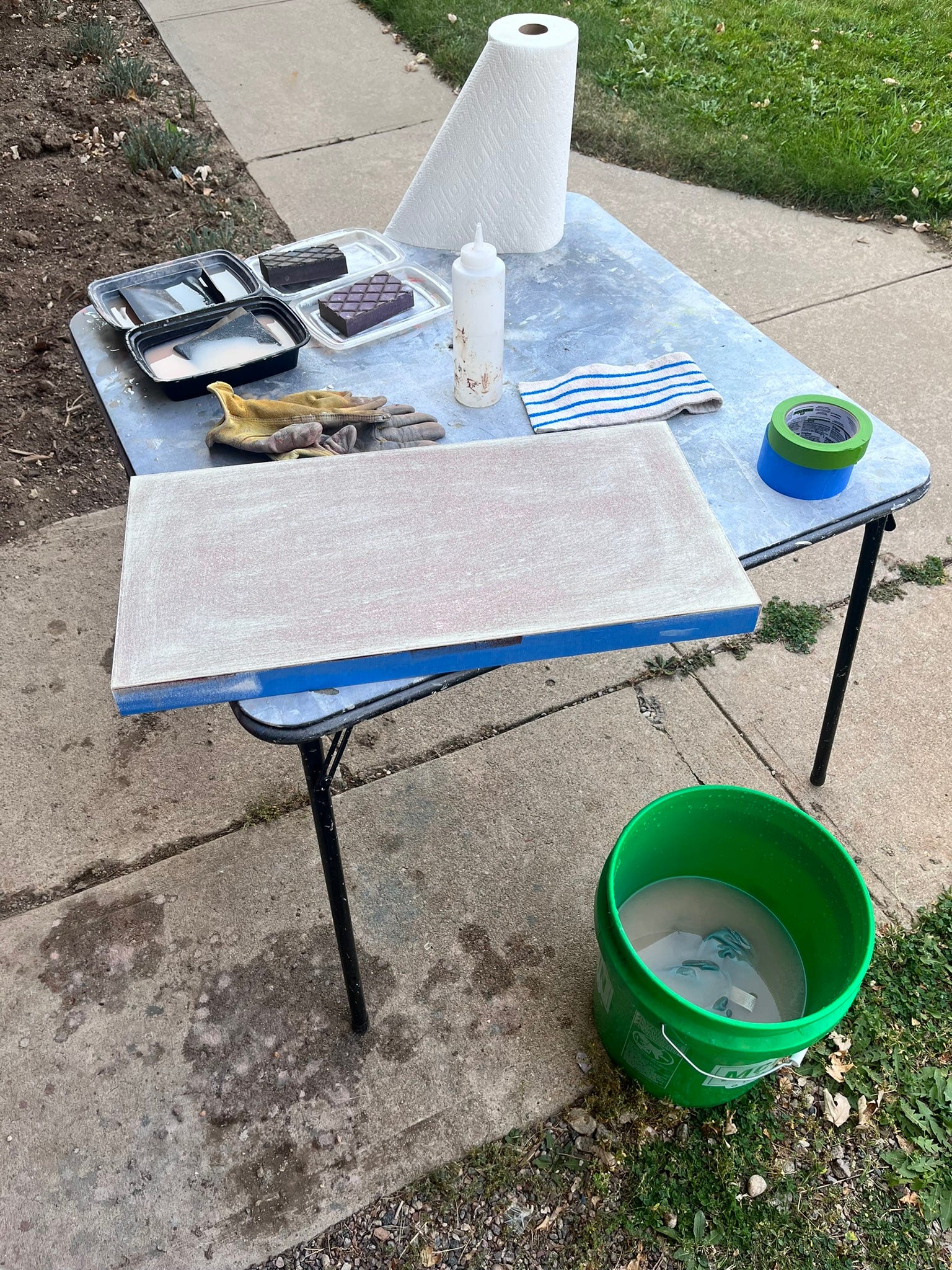
Now the sanding. I start off with a general, all-over sand with a pretty low grit, typically 100-150, if it’s been more humid I can go up. This part is actually quite hard. It’s very physical. Even with a super low grit it takes a lot of effort to scrape the paint away. I tried a mechanical sander, and it was just too erratic. One bad move and you’ve scraped all the layers away, down to the gesso or even wood itself. I honestly try to warm up, do some dynamic stretches, take an ibuprofen, get in the zone. The music gets loud.
Once I’ve released the color on the whole panel I start working on the boxes. There are a lot of different techniques, but they essentially come down to just a couple-few methods.
Muted: I tape around an area, and then will paint the dark color over it again. Let it dry, then give it a light sand to flatten it. Remove the tape and paint over it while rolling white paint (or whatever color I choose) over the now darkened area, ‘muting’ it.
Bright: Tape around an area and do extra sanding (medium grit, 240-800) after the general sand, working really hard to make it darker/more contrasted from what the final painting will look like. Sometimes I don’t need the extra sanding after the general sand, but in general I like to do a little. Once that’s good, the color is set and I tape over the area and keep it covered until the polishing stage.
Middle: Some combination. I could be more exact, but it’s really just playing around and between those two methods. It can end up more mute, or more bright, just somewhere in between. I like to think in terms of opacity, so I’ll usually assign an area something like 20% or 66% as a guide between muted and bright.
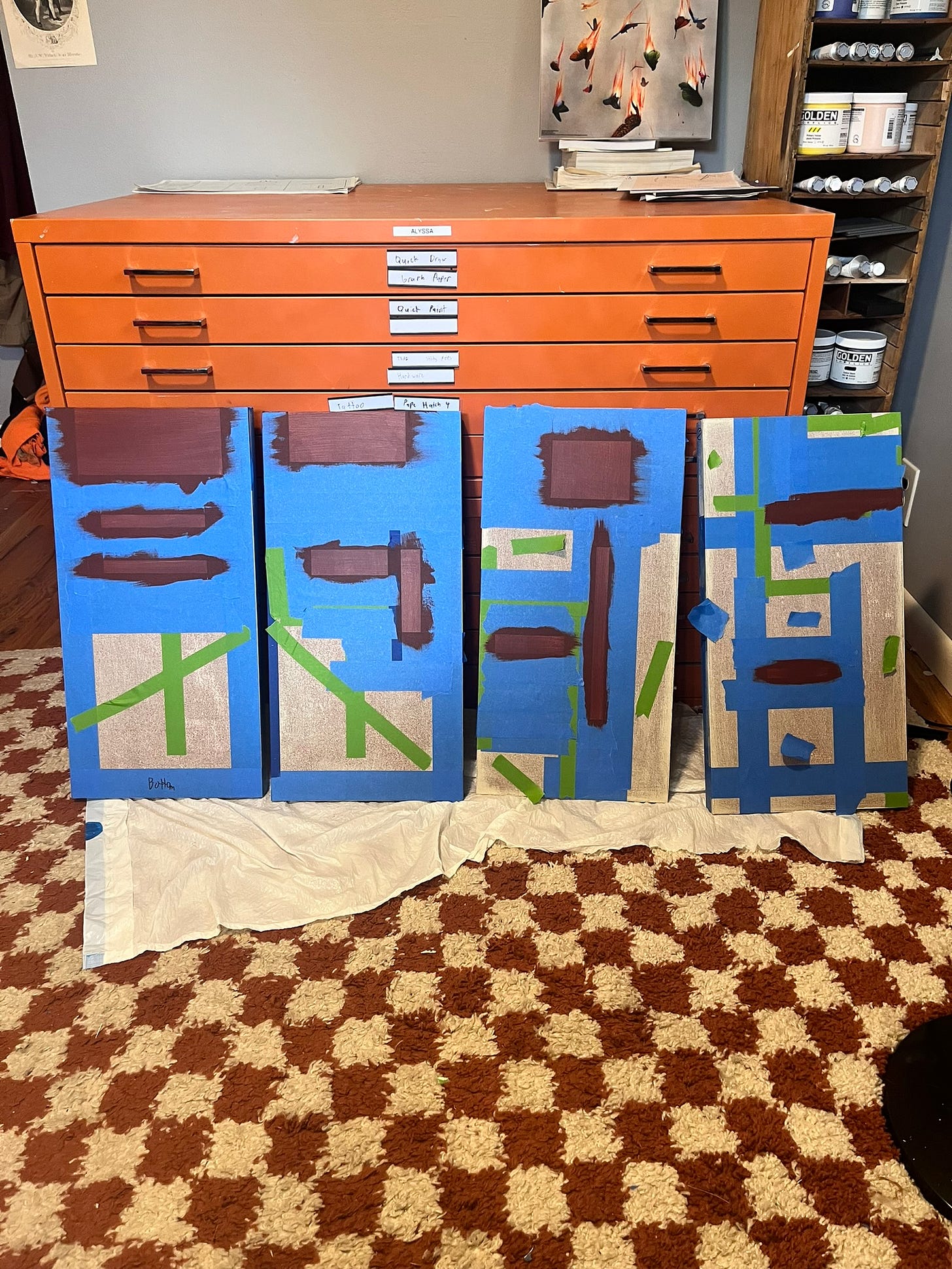
Working through the boxes
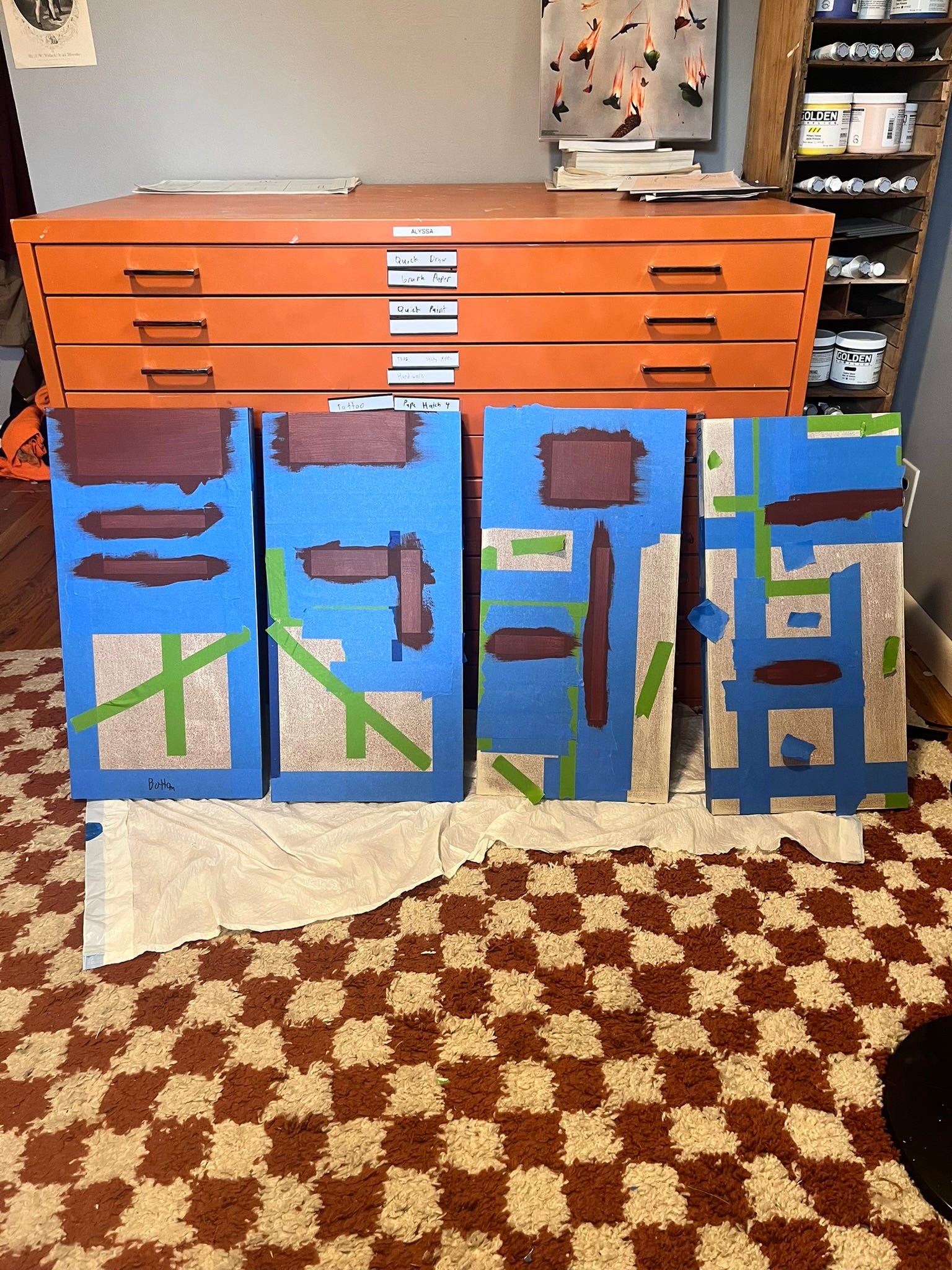
This part is finicky. First off, these boxes are specific: they need to be precisely measured in order to interact correctly with the printed forms down the line. Second, while I can kind of endlessly play with it, adding and subtracting more paint as long as I want, it eventually stops looking cohesive with the rest of the piece. Third, it’s a lot of back and forth between my office and the garage, the sanding is still physically tough, it can get pretty tiring. When I broke my foot last year I mostly stopped making these paintings because this step was so physically active.
All the while I’m painting whatever lighter color I want on top over the boxes, or over the tape covering the boxes. Pretty easy, it’s just about getting the layers right and not overdoing anything. I usually thin the paint out even more than the initial layers so it’s more precise.
Once it all seems good, and all the tape is removed, I check that the boxes are still in the right place and all the colors are cohesive. Again, I can go back and start the whole thing or certain parts over, but it gets dicey. Gotta be decisive.
Finally, I polish the whole thing. Using a much higher grit (1500+) I try not to remove any of the color I’ve established (maybe create a bit of shading), but get everything as flat as possible. The laser cutter is formidable, it’s a freaking laser, but I have to keep the power low so as to not scorch anything. That means the panel needs to be a uniform height, I can’t have big bumps of paint or texture, or the lines won’t be consistent. This takes a while but is much less strenuous, and since by this point I’m pretty happy with the painting, it’s fairly rewarding to make the finished painting ‘shine.’
The laser cutter is terrifying. I’ll write about it later. The process gets completely taken out of my hand. Once it starts you can’t stop it and mess around. It’s final. Stressful as hell. The machine isn’t pretty, but it works, most of the time.
But anyway, I like my process. I’m always refining it, and a lot of what I mentioned doesn’t apply to certain other pieces I make, or gets messed around quite a bit. And a lot of it changes over time. I doubt this will be the process forever with these particular pieces. But I’m having a good time, why stop?
…I’ll stop when it sucks.